Trust is the glue that holds our relationships and society together
“Trust me: I’m your pastor”
Trust is the glue that holds relationships together in the long term. But trust is notoriously slow to build and scarily fast to break. This happens because our brains are wired to protect us, making us naturally cautious while getting to know someone, and deeply reactive when they let us down. Past patterns of misplaced or broken trust create fear, and for very good reason. Fear has a memory.
My own family is one that easily trusts people. Probably too easily. Reason being that Mom and Dad van der Spuy have trusted too easily and have modelled that to the rest of the clan. This has resulted in a saying within our tribe; “Mom, not everyone is your friend.” And then, of course, we all laugh.
Fear is a very natural human emotion. It serves an enormous purpose in keeping us safe.
Fear keeps us safe by acting as a natural warning system that triggers physical survival reactions. Specifically flight, fight or freeze. It sparks fast reactions, it prepares muscles, it sharpens focus, it stores memory, it protects us from real and physical threats, it sends us social and mental signals. Yet the Scriptures repeatedly urge us not to fear! In fact, the most often repeated phrase in Scripture, both Old Testament and New, in some form, is “do not fear” or “fear not” (Gen 15:1, Is 41:10, Jn 14:27, Dt 31:6, Ps 56:3,4).
How now?
In this blog I am equating faith and trust with one another and using them almost interchangeably. It is my conviction that faith has far more to do with trusting God than cognitive belief in his existence and / or holding to certain doctrinal teaching.
The fear that Scripture calls us away from is, not from the invaluable fear that serves to protect us and keep us alive. It is a call away from the fear that causes us to doubt God and that pulls us back from trusting him. That is very different from the necessary fear that protects us. It is the fear that leads us away from faith. Yet, it seems that ultimately only God is fully trustworthy and trusting him is never misplaced,
Ps 118:8,9 “It is better to take refuge in the LORD than to trust in humans. It is better to take refuge in the LORD than to trust in princes.”
My suspicion is that God calls us away from the kind of fear that breaks trust in him as often as he does, exactly because he knows our human condition.
God knows that despite his encouragement to the opposite of fear, which is trust, we will be drawn into fear. Life is life and the world is two things at the same time. The world is both beautiful and filled with unlimited potential, and, at then at the same time the world is a dangerous and scary place. Previous pain and trauma will cause us to fear when faced with a similar set of circumstances once again. The “muscle memory” of our brains remembers only too well.
Should we then just give up on people and retreat into isolation? Perhaps citing that only God is fully trustworthy? I think not. Even monasticism has strong community. Cynicism creeps with age and muscle memory but we continue to hope, and we continue in love. “Love bears all things, believes all things, hopes all things and endures all things 1 Co 13:7.”
The call is not to cynicism regarding human relationship, despite the temptation to retreat there. The call is to more love, more trust, more appropriate boundaries, better discernment, less bitterness, more forgiveness, and… a very healthy dose of self-reflection.
Because, let’s face it, neither you nor I, are fully trustworthy for everyone.
Why building trust is so hard
Think of building trust like a savings account. We can’t fill it up with one massive deposit, as much as we would like to - in fact, there is little I would like more than to make one large deposit into my savings account. As Woody Allen said, “If only God would give me some clear sign, like making a large deposit in my name at a Swiss bank.” Amusing for sure, but sorry Woody, both with God and with people, we need to make small, consistent deposits over a long period.
Trust requires a long track record: We judge people based on observable patterns. One good moment does not prove that someone is reliable. People need to show up for us time and time again for us to fully trust them. Trust is like Eugene Peterson’s “Long obedience in the same Direction.” Typically, inconsistent people will remind you of when they did X, Y or Z for you once upon a time, but tend to forget the other twenty times they were not there for you at all.
Trust requires vulnerability: To trust someone, we must take risks and open ourselves to being hurt. Naturally, our brains hesitate in doing this until we feel completely safe.
Trust takes mental energy: Our brains constantly evaluate whether someone’s actions match their words. Consistency is a slow and gradual process that is only validated over time. Inconsistency absolutely decimates trust.
Gone in a split second
If trust is built much like a brick house, brick by brick, then a single betrayal is much like a wrecking ball. Years of hard work is smashed in an instant because of how our brains handle betrayal.
The negativity bias (bad is worse than good is great): Noticing threats (fear) is a matter of survival. Our brains naturally pay way more attention to one bad act than a hundred good ones.
Breach of trust changes how we see someone: A single major lie or betrayal acts as a giant red flag. It forces us to rethink everything we thought we knew about that person's character.
The cost of being wrong is high (loss function): Getting burned hurts deeply. To prevent that pain from happening again, our minds instantly shut down and go into defense mode.

Repairing the Damage
Once trust is broken, fixing it is an uphill battle – sometimes it’s an impossible battle. It is not as simple as saying "I'm sorry," because the entire dynamic of the relationship has shifted.
Constant suspicion: The person who was hurt will naturally start monitoring the other person's behaviour, looking for signs of another lie, another sign of inconsistency, or another failure to follow through.
Building walls: To protect themself, the hurt person will close off their emotions, making it very hard to reconnect. Sometimes people acting defensively will block off all attempts from the other party toward reconciliation.
Sometimes that would be an unreasonable response and sometimes, for long term self-protection, it might honestly be the wisest and most advisable route. When people consistently show themselves unwilling to hear you, or continually dismiss you, or regularly act in duplicitous ways toward you, then you might well need to walk away. It is a sad place to land, but sometimes the recognition of patterns that just do not shift might necessitate that.
Actions speak louder than words: Apologies are cheap. Rebuilding trust requires the parties who have breached trust to start from scratch and prove themselves all over again, which takes immense time, gentleness, a singular intentional focus, and patience.
The single eye
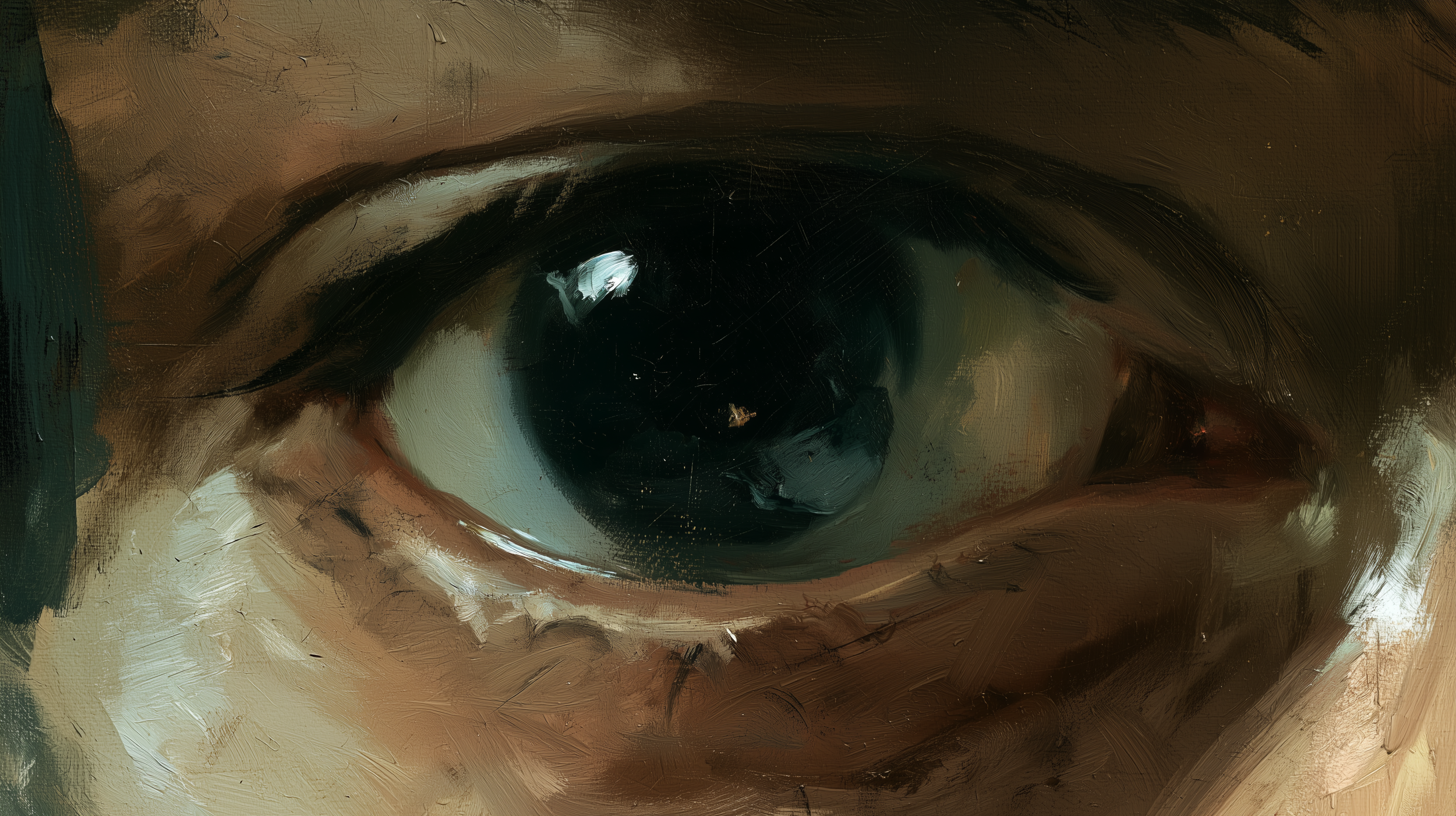
The Bible often refers very negatively to "double mindedness." Gk Dipsuchos. (δίψυχος) is a Koine’ Greek word meaning "double-minded" or "two-souled". In the Sermon on the Mount, in Matthew 6:22-24, Jesus gives us a striking visual metaphor. He says,
"The eye is the lamp of the body. If your eyes are healthy, your whole body will be full of light. But if your eyes are unhealthy, your whole body will be full of darkness. If then the light within you is darkness, how great is that darkness! No one can serve two masters. Either you will hate the one and love the other, or you will be devoted to the one and despise the other. You cannot serve both God and money."
When Jesus speaks of a healthy eye, the original Greek word is haploos (ἁπλοῦς) which translates to "single, clear, or focused." It means having one undivided aim. Conversely, an unhealthy eye is divided, distracted, and focused on multiple conflicting desires. Trustworthy people have no, or very limited, ulterior motives. They act with a singular motive. Untrustworthy people are usually trying to accomplish other things to their benefit, over healthy relationships. Relationship becomes significantly transactional.
The big picture
The same rules that apply to individuals apply to organizations. The companies we buy from or work for, the churches with whom we worship, the clubs or societies we belong to, and the governments that lead us. A brand or institution can spend fifty years building a great reputation, only for one major scandal to ruin it overnight. In the modern world, bad news spreads instantly online, making public trust scarcer and more fragile than ever before. Getting this generation to the voting booths is a challenge exactly because their trust levels are low. They have often experienced bad parenting and witnessed dreadful governance. They do not, as a rule, trust authority, institutions or politicians.
The bottom line
Trust is hard to earn and easy to break because our survival instincts tell us to play it safe. Building relationships takes hard work and harder conversations sometimes. Earning trust requires proving you are safe repeatedly. Losing trust just requires showing, even for a moment, that you aren't nearly as safe as you might think you are.
Telling signs warning you when not to trust someone
A few months back a good friend sent me something written by Dr. Henry Cloud, who I have always appreciated. It’s on personal boundaries and healthy relationship. It is a summary of the personal traits of a consistently unsafe person.
I list them here for two reasons; 1. To assist each of us in being that person others regard as safe – God knows, there are few of us who can claim to be safe for everyone, and 2. For protection purposes, to help us each discern the person who truly and consistently is unsafe. I list these in the hopes of us all being transformed into the image of Jesus, just a little bit more, day by day.
The traits of the unsafe person that are easy to miss at first
They are charming before they are consistent
They apologize but nothing ever changes
They make you feel responsible for their emotions
They are wonderful in public and different in private
Conversations about your concerns somehow always end up being about them
You leave interactions feeling confused, small, or like it was your fault
Ultimately, it is the same Dr. Henry Cloud who says “unsafe people are those who cause injury to your soul without remorse.”
Pay attention to the pattern, not just the moment.
“Trust me, but use your eyes (Russian proverb.)”