Christmas at Easter - who is your King?
Luke 2 In those days Caesar Augustus issued a decree that a census should be taken of the entire Roman world. 2 (This was the first census that took place while Quirinius was governor of Syria.) 3 And everyone went to their own town to register.
4 So Joseph also went up from the town of Nazareth in Galilee to Judea, to Bethlehem the town of David, because he belonged to the house and line of David. 5 He went there to register with Mary, who was pledged to be married to him and was expecting a child. 6 While they were there, the time came for the baby to be born, 7 and she gave birth to her firstborn, a son. She wrapped him in cloths and placed him in a manger, because there was no guest room available for them.
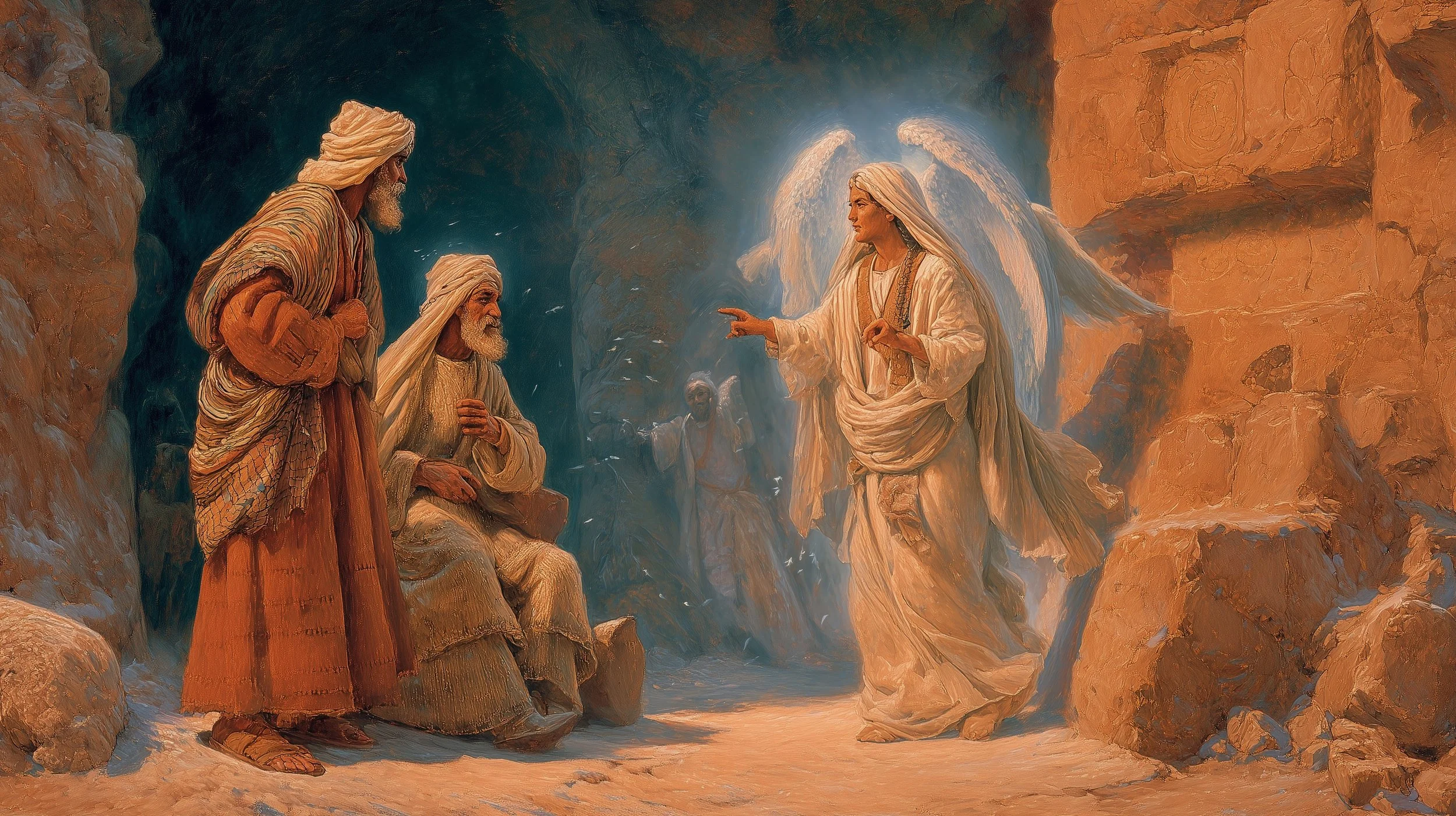
8 And there were shepherds living out in the fields nearby, keeping watch over their flocks at night. 9 An angel of the Lord appeared to them, and the glory of the Lord shone around them, and they were terrified. 10 But the angel said to them, “Do not be afraid. I bring you good news that will cause great joy for all the people. 11 Today in the town of David a Savior has been born to you; he is the Messiah, the Lord. 12 This will be a sign to you: You will find a baby wrapped in cloths and lying in a manger.”
13 Suddenly a great company of the heavenly host appeared with the angel, praising God and saying,
14 “Glory to God in the highest heaven,
and on earth peace to those on whom his favor rests.”
It is Decreed
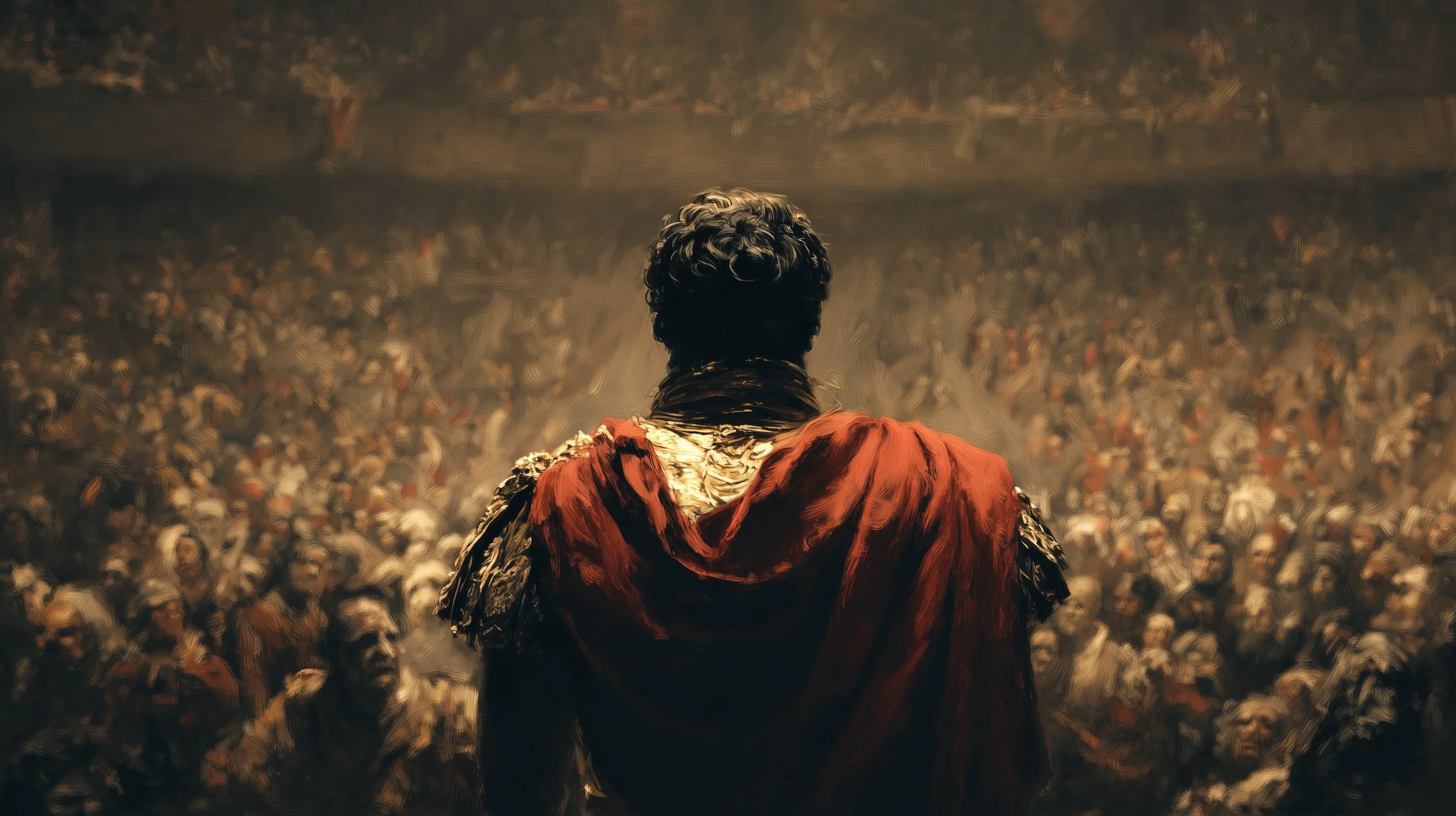
This story from Luke’s gospel is so familiar that it comes to us, almost as a Christmas carol. But, more pertinently, it is a text that reminds us that our God favours the marginalised, oppressed and the broken, over a world that favours the powerful and the mighty. A Cesarian decree sets up the contrast between the world’s most powerful political figure – Caesar Augustus - and our story’s hero - humanity’s rightful King. The King of love.
“In those days Caesar Augustus issued a decree…” There you have it. Bang! Power and privilege. I decree it…therefore it is. Caesars spoke in absolutist terms. Some followers of Jesus do too. Autocratic leaders do too.
The emperor Augustus was the most powerful ruler the Mediterranean world had ever known up to that point. He desired public adoration so desperately that he had, what we would call, a hype sheet. His “Cesarian” resume. The hype sheet was known as the Res Gestae of the divine August One. Inscriptions to that effect were pasted up around the empire. How’s that for a title, by the way? “The Divine August One.” Not half bad.
I’ve asked my home church if I can have that as a self-chosen title for me rather than “executive pastor”, which seems a bit bland. Traumatizingly, the leaders declined my request by a vote of 6/4. Close, but no coconut.
Res Gestae means ‘things done.’ Things that this Caesar Augustus was purported to have done for you, dear plebian citizen. Sound familiar? Caesars would paste their evangelion, their ‘Good News’ on posters in the city and on the Town square. They would have it shouted and proclaimed by heralds (town criers). ‘Hear the Good News of Caesar Augustus, the divine August One’ - with accompanying bugles and fanfare. It was Roman propaganda announcing the Pax Romana – A new era of peace and order.
When Jesus uses the term ‘Good News’ for his Gospel, he is purposely invoking the same language used by Caesar to indicate that Caesar is not really King. Not when compared with the King of Kings. We are so far removed from the language of the day that we don’t easily understand how provocative Jesus is to the rulers of the day and to their lackey /minion Jewish Sanhedrin religious underlings.
Jesus, while proclaiming and demonstrating his Good News, is clearly setting himself up – anytime he uses Good News language – against Caesar and saying, if it’s Kingship you are looking for, you won’t be finding it in Augustus. Jesus is proclaiming a different kind of Kingdom with a different kind of King. The King of Love our shepherd is. Jesus says things that are incredibly confrontational with the Roman Empire and emperor. The emperor who is not only regarded as emperor or king, but also as the deified and August One.
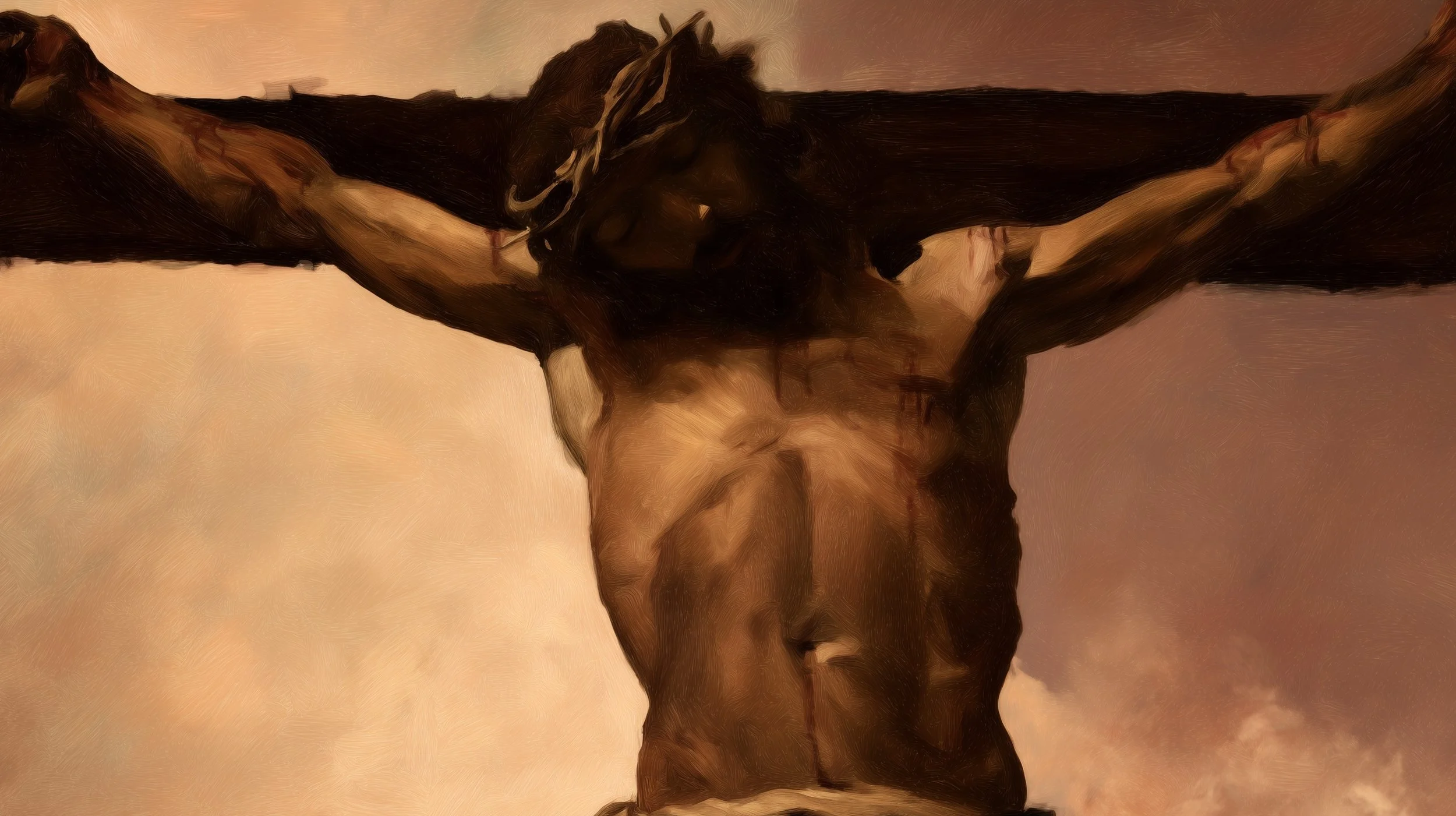
Jesus did not go to the cross for being a nice guy. Luke 23: 2 tells us why Jesus was executed. “We found this man subverting our nation.”
“We found this man subverting our nation.” How did Jesus subvert the nation? He subverted hierarchical rule. That unholy order of who's on top and who's the bottom, of who's in and who's out, and he said, love them all.
Pax Romana
Emperor Augustus was famous for establishing his Pax Romana - the Roman peace. But that peace only meant that he had forcibly subjugated all nations within his empire.
It was essentially “choose the version of peace on offer or be assured you will run into me.” All dictators do that. All totalitarian states and oppressive leaders operate similarly. You can have peace, but within the parameters we prescribe to you only. Having grown up in apartheid South Africa, I understand this only too well.
In Gaul’s (modern France’s) case the Pax Romana might have sounded something like, “Gaul, you will be at peace with your occupiers or be slaughtered – take your pick.” It was Julius Caesar who conquered Gaul by defeating Vercingetorix in the Gallic wars (*refer Asterix – Goscinny & Uderzo). But it was Augustus who offered the ongoing peace to the invaded nations by gradually inviting the conquered nations to become part of the Roman Empire, on his explicit terms.
General Vercingetorix was imprisoned for six years by Julius Caesar, before being executed. But Gaul was eventually “at peace” with their Roman occupiers. All except for one tiny fishing village as any Asterix reader will be able to tell you. The movie Gladiator shows an account of Marcus Aurelius offering the Pax Romana, but that is a fictitious account. The Pax Romana was Augustus’ claim to fame, and it lasted about 200 years. The Pax Romana died out toward the end of Aurelius’ reign.
In the case of the Roman occupation of Judea the Pax Romana may have sounded something like this: Judea, you tiny irrelevant little country province in the huge Roman Empire, “you will be at peace with us, whether you like it or not, so zealots beware, there will be no tolerance of demonstration or marches against the state or tolerance of any criticism levelled at Caesar, or those who do his bidding.”
There was a southern African King named Mzilikazi. Mzilikazi was a former lieutenant of the more famous Zulu King Shaka. Mzilikazi had a dispute with Shaka and led his breakaway group of Nguni people. He established his own kingdom by subjugating and incorporating all the tribes along his route North.
The conquered groups were brought into his society. They became the Matabele people of Zimbabwe. Same thing as the Pax Romana really, ‘lay down your arms and be incorporated into our people and our peace, or…die…your choice.’
Reading the text, “In those days Caesar Augustus issued a decree…” we may think that Caesar is the prime mover and shaker in the story. He is clearly the antagonist, but not the prime mover. He is just the bad dude who is sparking a temporary mass migration. Reading further, we discover that God is the one orchestrating these events.
The emperor passed a decree that people should register for the census. Judeans did not like censuses, because the government used them to determine taxes, and Judeans did not like paying tax to gentile governments. Moreover, let us assess how affectionately or not we might feel about Canada Revenue or the IRS, or SARS today. We may say they are inept, or slow, or even unfair, or unjust. But they are not (yet) brutal. Immigration law enforcers seem to be the ones who are increasingly brutal. But not yet tax agencies in our times. Roman tax-collectors were often brutal.
Roman taxes were so harsh in Egypt that many people, unable to pay their taxes, became tax fugitives, leaving behind all their property. Tax collectors sometimes tortured family members left behind to find out where the fugitive relative had fled. When crops were bad, sometimes entire villages skipped town and started villages somewhere else to evade the tax collectors. And I thought I had tax problems?
Taxes went to Rome and the local rulers who served Rome, so Jews didn’t consider Jewish tax collectors very patriotic. Think of poor old Matthew and the way he is portrayed in the series the Chosen. The next tax census after the one recorded here, in the year AD 6, provoked a bloody revolt.
Joseph and Mary were living in Galilee, but they had to return to Bethlehem for the census. People had to register where they owned property; Galilee was not yet under the tax census, but Joseph probably still owned some land in Bethlehem, whence he originated. Even though Mary may have been far along in her pregnancy, they made the journey back to Bethlehem. Fortunately, Luke says that she went into labour “while they were there”—not, as in the movie versions, right after they reached town.
It's all upside-down
The proper translation of the word ‘inn’ here more likely means “no room in the home.” Some ancient tax records show a poor family of ten people renting a quarter of a room for lodging. The family in Luke’s story, probably has many relatives converging on their property for the tax census. So, the young couple goes to where the animals were kept behind or below the house. When Jesus was born, Mary wrapped him tightly in “swaddling cloths,” what ancients used to try to help a baby’s limbs grow straight. Then she laid him in an animal feeding trough.
This place of welcome for the King of love, offers quite the contrast with Caesar’s palace. A contrast between the palace and place of power and the abode of the coming and true King. And it is a significantly stark contrast. It is upside-down powerlessness vested in the One who is all-powerful. In Luke’s literary device, he is contrasting power and powerlessness and he’s doing that intentionally.
Luke says shepherds were tending their flocks in the fields by night. Because priests offered sheep as sacrifices, many shepherds kept flocks near Bethlehem, which was just six miles from Jerusalem. Even though in earlier times Jacob, Moses, David and Amos were all shepherds, by this period respectable people—both in Judea and in the Roman empire generally—despised shepherds as lowly, stinky rogues. At this time in Israel’s history, it was not what you would call a respected vocation.
Just like the poor couple with the very suspicious pregnancy, these were not the sorts of people society would have found impressive. But heaven’s perspective is different. Suddenly an angelic host began singing the praises of the newborn child who would be King, Saviour, and the bringer of peace.
Throughout the Roman Empire, choirs would hail the great emperor Augustus as “saviour” and the “bringer of peace.” On the emperor’s birthday, the Roman Empire worshiped him as a god in his temples.
But at Jesus’s birth in an animal feeding trough, no mere human choir declares his glory. The choirs of heaven announce the true king, the true saviour, the bringer of true peace, the King of love, for the sake of humanity.
The famous emperor Augustus is not the ultimate ruler in this story. Nor are his equivalent tyrants and autocrats through ought the ages, of whom there are so many today. The King of love is born to a poor family, under poor circumstances, born naked (like anyone else) and immediately wrapped tightly in rags.
It is to shepherds—who were low-class, low-life, low moral, low calorie, low IQ, low EQ, nobodies (basement dwellers) that heavenly choirs announce the birth of the King of love. Like the cult worshipers of the emperor Augustus, we tend to look for God in government, in palaces, mansions, courts and gathering places of the worlds’ mighty and powerful. Presidents, Prime Ministers, billionaires, technocrats, and visible leaders of all kinds. But when God comes to us, he comes as among the broken. And when we struggle to find him, it’s often because we keep looking for him in all the wrong places.
“Let the way of thinking that was in Christ Jesus also be in you: although he was in divine form, he didn’t try to seize equality with God. Instead, he poured himself out in the form of a servant … and humbled himself, becoming obedient to the point of death, even death by crucifixion” (Phil 2:5-8).