Simple is Bigger
This months’ blog is something of a personal reflection. I tend to process by writing. I write it in the hope that it could assist others to process too. Please be patient and kind to yourself as you do this.
Twenty-five years ago, society did not really have the language to express many of the things relating to the human psyche we now express quite freely. The study of trauma and trauma response, and trauma counselling, despite two World Wars and many wars besides was really in its infancy two decades ago. It has advanced significantly but we still have some way to go.
Even though it might be that trauma studies are relatively new, what we certainly do have now that we did not – apart from a few specialists - have twenty-five years ago, is the language necessary to articulate these things. Sadly, it was the study of PTSD in war veterans and then too the study of rape trauma in women that got the study of trauma moving.
We speak quite freely now about things that evoke a trauma response in us. Or we speak of things that trigger us and inform us that we might have work to do in recognising and disarming our triggers. Or we speak of an environment, or a person being toxic, or having narcissistic or sociopathic personality tendencies. We examine whether the way people ‘do’ relationship is purely transactional or if individuals can act selflessly and show genuine care for others, including the most vulnerable. The ‘least of these my brothers and sisters (Mt 24).’
Certainly, in my own church circles this language not only exists but it has helped us to articulate things we were not fully able to articulate just a few decades ago. Thanks to foundational work done by people like Burgess & Holmstrom, Bessel van der Kolk or, in my family’s case, our own major influence, Gabor Mate’ we are all mostly way more aware of what causes trauma and why, and to what level. Some of these influences are distinctly faith-based influences and others not so much.
It is of very little consequence. I don’t relate in any way to the fundamentalist thinking that insists on truth needing to come from a distinctly Christian source. Frankly, that kind of thinking is part of the reason we deal with so much significant trauma in not just a few Christian families. All truth, no matter whence it emanates, belongs to Jesus. I am very comfortable being regarded as an arch-optimist when it comes to the work of the Holy Spirit outside of the Church.
Like most formally educated pastors, psychology is a notable part of my training. But I am not a psychologist. Even clinical pastorate as a major at Masters’ level, does not make me a psychologist. I am grateful for the work of psychology and the exposure to it though. The link between the things that modern psychology has discovered that Scripture seemed always to know is fascinating.
Forgive and you will be Forgiven
Many would say that the most central claim of our faith is the need to receive and grant forgiveness. From God and humans. Forgiveness is, after all, in large part what has been won for us by Jesus. Jesus came to defeat sin, sickness and death. Forgiveness is a dominant theme in the OT and the NT. The entire sacrificial system of the OT is built around the problem of what to do with our sin before a Holy God. The Gospel includes that most important of phrases, “Jesus died for your sins.” And, of course the ability to be able to forgive or not forgive is so often tied into the PTSD I mentioned earlier. I would love to venture a little deeper into that, but the need for brevity does not allow me to do so today.
New perspectives on Paul (NPP) aside, Paul was deeply and profoundly aware of his own sin. That is beyond debate. “…but I see another law at work in me, waging war against the law of my mind and making me a prisoner of the law of sin at work in me. What a wretched man I am! Who will rescue me from this body that is subject to death? (Rom 7:23,24).
For the reader not acquainted with NPP, let me try to summarise it as best I am able to in two paragraphs. NPP reinterprets Paul’s letters through the lens of first century Judaism arguing that Paul wasn’t fighting against “works righteousness” (earning salvation by law) but was more concerned about Jewish boundary markers like circumcision and food laws that kept Gentiles excluded from God’s family. In this argument, justification by faith means becoming a covenant member in Christ’s community. This involves then a corporate identity shift emphasizing the unity of Jew and Gentile rather than an individual’s right standing in Christ, in relation to personal sin. Critics of NPP (of whom I am one) are concerned that it downplays personal sin and our need for atonement.
At root this is what makes me evangelical -in the original sense, without the added political assumptions. For me it is both / and, rather than either / or. Clearly the unity of Jew and Gentile in worship together in the new community of Christ is – in part – what Paul was about. Equally clearly, Paul was about individual right standing in Christ. We do not need to choose between these things as two different and binary options.
NT Wright is a theological hero of mine. I value his and others’ NPP. I am grateful to have been introduced to seeing the thread that runs through Romans that has much to do with Jews and Gentiles in fellowship together at Rome. But I think, in general NPP has radically underemphasized Paul’s - and your and my - problem with sin, and what to do with it. One is allowed to differ from your theological heroes, btw.
The major voices in NPP, are E.P Sanders, JDG Dunn and NT Wright. I landed on my own perspective on new perspectives with the work of a retired Mc Masters’ professor and author here in Canada, Stephen Westerholm. Martin Luther clearly was not convicted by the problem of Jews and Gentiles in fellowship together at Rome. He was tormented by his own sin and need for assurance of his own forgiveness. I concur.
Back to our language of articulation and the overlaps between Scripture and modern psychology. Modern psychology, whether secular or faith based has discovered how enormous a general posture that is able to grant and receive forgiveness is just for personal wellness and wholeness. In that sense at least, modern psychology agrees with what the Scriptures teach.
Scripture makes much of the role of mothers and fathers in the psycho-spiritual-emotional development of their children. Modern developmental psychology specifies parental roles and the influences of the same in early and later childhood development.
The overlap between the ancient Christian practice called the cura animarum (care of human souls) and modern psychology too is not insignificant. The one area I still wait in anticipation for the modern care disciplines to catch up to the Scriptures is spiritual care. We are very much about soul care. We are way less about the care of the human spirit, but that perhaps for a different day.

Loudmouths, Bullies, and Spin-Doctors
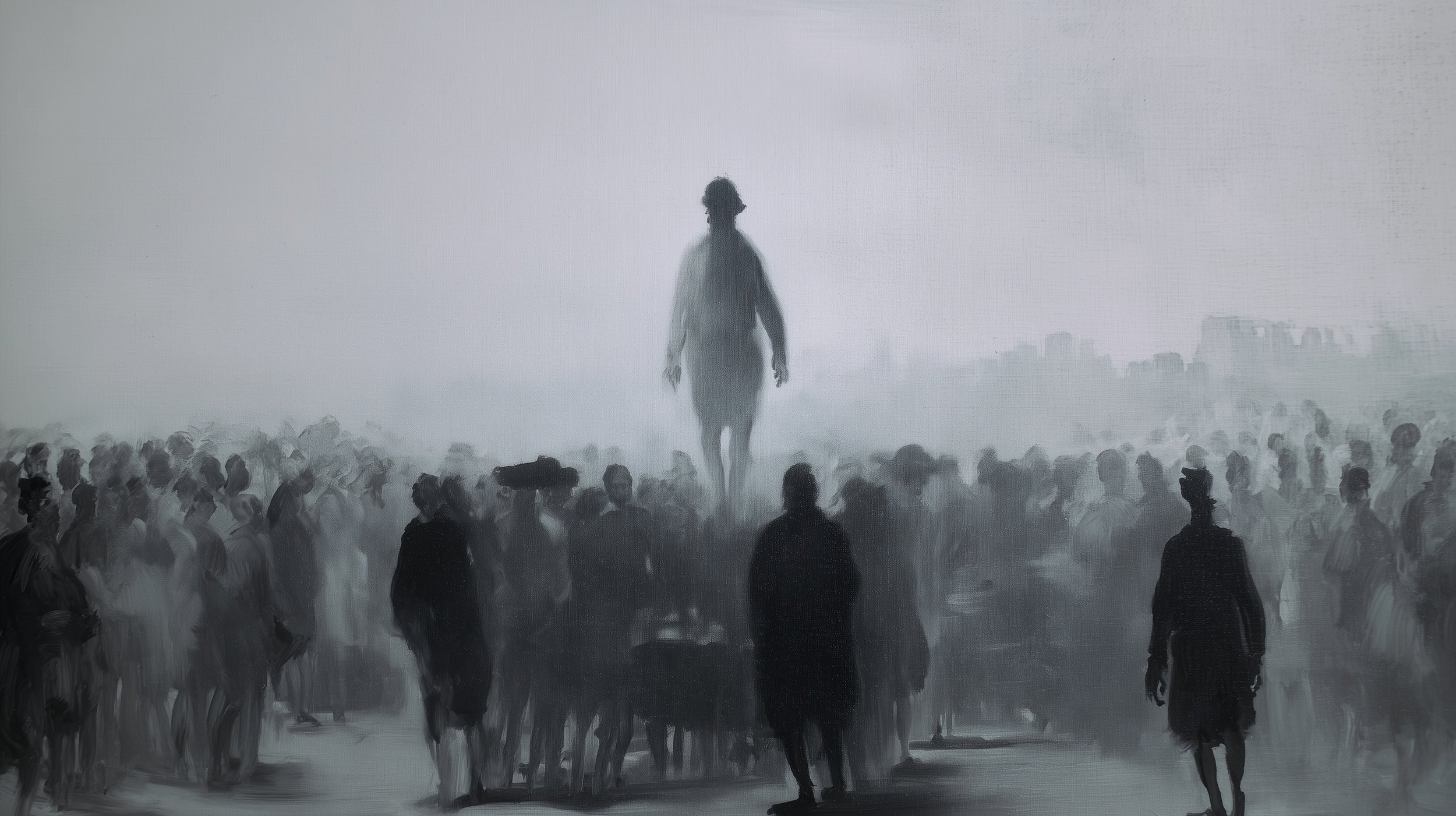
Why is it then, that with all the language and knowledge we now have at our disposal to articulate things of this nature; with all the information now at our finger tips, that people who rise all the way to the top, are still – as a generalization to be sure – often the people who display so many of the traits we would regard as extremely negative and harming to the well-being of others?
We see it all around us. Political figures, billionaires, corporate leaders, mega-Church pastors. Not all to be sure. But an unhealthy and disproportionate number of them. I often wonder why we even listen to what some of them have to say. But there is no accounting for media and, more specifically, social media.
Is there something in our human psyche that says, ‘well if we want to see X in our leaders, then we need to be willing to sacrifice Y?’ Are we not yet, despite centuries of pain, at the place where gentler, kinder, more authentically caring, more collaborative and consultative, humbler, and less dismissive are character traits and postures we absolutely insist on receiving from those who would aspire to lead us? Apparently, we are not yet there.
Over many years in leadership, I have had to ask myself some hard questions around my own character in this regard. Ever since I was a small boy, leadership has somehow fallen to me. How much of this is due perhaps, to my being a ‘big personality’?
I led the Boy Scout Troop I was part of and represented them at a Boy Scout World Jamboree in 1979 at sixteen years of age. At various times I was classroom leader (or what we called class captain) at school. I captained many of the Rugby teams I played for, starting in the under 11B team of the school I attended and culminating in Captaining the 1st VX of the oldest rugby club in South Africa. Management in the workplace followed, with General Management of a division of a multi-national listed organization being my last held position before moving into ministry with more intentional focus.
Leadership in the Church and Christian NPO’s has included, senior pastoral roles, chairing a city ministerial, regional and national leadership roles for a denomination / movement, heading theological task teams, serving on a leadership succession team, mission center leadership for an NPO (Country Director), being the principal of a seminary etc. And aside from these official leadership roles, it has been a continuous battle for me, not to lead a revolution whenever I have discerned a leadership void.
If leadership is in and on you, and there is a felt void, the motivation will gravitate toward that void. The motivation is not wrong. Somehow the Lord has never released me to lead the envisaged revolution that has so often caused inner turmoil for me. I have been a ‘wannabee’ revolutionary who has never done it. Martin Luther and Henry VIII have nothing on me.
How much of this leadership has come my way because I may display of more of the traditionally ‘strong’ - but so often misguided - characteristics we seem to want from our leaders even though we don’t necessarily admit to wanting them? How much leadership has come my way because I am at root a servant leader in the fashion of Jesus versus how much of me is vested in me? Is my leadership under people, or over people?
This is not an easy question to answer. None of us sees ourselves one hundred percent objectively. I think I have a solid self-awareness, but I’m pretty sure I still have some blind spots. A particular appearance doesn’t help in making a first impression that often has people believing, ‘well here comes the dude. The prototype A-type male leader we need to get us out of the trouble spot we are in.’ I suspect that on occasion, some tasks have fallen my way because of that skewed first impression – be at peace, I’m working at it.
Experience says that when it comes to it, and those who were instrumental in landing me wherever I happen to have landed, discover ‘oops, he’s not quite what we thought we had - he’s a lot gentler and a little less assertive / insistent and not quite as strong and forthright as we had hoped for’, disappointment inevitably follows.
Over years though, people have said and prayed things over me. Occasionally helpful things but mostly far less helpful things. Sometimes prophetic things. Things like, ‘you are way bigger than you think you are’, or ‘God has something very big for you in the future’, or even ‘this is still not what God has for you ultimately.’ Initially that kind of prayer was quite encouraging to me, because I still bought into the myth that God’s favour translates into big and powerful and influential. As years have passed, I have found most of those prayers, save for a small handful I still treasure, way less helpful to me. I’ve had to try not to take those prayers too seriously. To eat the meat and spit out the bones, as we say.
As those enormous things - I’m still not entirely sure what they were or are (King of the world perhaps?) – have mostly failed to materialize, I have had to adjust my expectations and, more importantly, ask myself the question, ‘What is in fact Big in God’s Kingdom?’
For a more complete answer please consider buying a copy of my book “Bigger Things”.
But as a quick attempt to answer, I’ll run with this: Simple is good. Our metrics are very seldom God’s metrics. We are all too easily impressed with the show and the mirrors.
Saying no to distraction
Quite recently I had to determine whether a very senior position was something God might have for me. After a brief process of discernment I determined that it was not a thing God had for me to pursue. My wife Anida asked me whether I was ‘very disappointed’ in what I had discerned. I answered – honestly, I think - , ‘no, not really, I never thought it was realistic in the first place. I long for simpler things now.’
Are there things that have disappointed me in my life? In the Church? In general? To be sure there are. Are there places at which I have felt overlooked, or sidestepped, or even treated dismissively? Most certainly, yes. No denial there.
But these things tend to be different things now from the things that would have disappointed me just a decade ago. Positions and titles are way less important to me now than simply trying to do the will of God in my life. That is way easier said than done.
I apologise in advance for spiritualizing this. But honestly, I just want to do the will of God. Might God’s will for me involve positions and titles that might be needed to accomplish what God intends to accomplish? Indeed, they might. If I am going to accomplish what God has for me to accomplish, it might be that I need to be seen to be something or someone who is deemed as important and senior. That would then go along with accompanying office, and titles, and bells, and whistles – although I would far prefer crisp $100 bills. Or, it might be that for me to accomplish what God has for me, it might not require any of that at all, crisp notes aside, which are always welcome.
Some Christians might regard the simpler things I long for as less spiritual or less indicative of being ‘sold out for Jesus.’ I am every bit as sold out for Jesus now as I was when I was first called thirty-six years ago. Where I am different now is that I do not believe that ‘sold outness’ equates to me driving myself to unhealthy proportions and shortening my natural lifespan in a misguided effort to try and save the whole world. I no longer have a felt need to be seen in a particular position either. I’m not sure I was in this place fifteen years ago.
Try as I might, I cannot really save anyone, I’ve tried. But I have experienced God saving me and I have seen Him save many others. God does the saving. I would love to continue to be able to pour whatever Jesus has put into me into whichever people happen to find themselves under my spiritual care at whatever level they are under my care.
But paramount in that people group ‘under my spiritual care’ are my children and grandchild with, I am told, more on the way. I would love nothing more than to pour into them way more intentionally and with a more significant time allocation than my current circumstances allow me to do. It is this freedom I am praying for.
That is my prayer for me and for you.
That we would be able to see when small is big in God’s Kingdom.
“Lord, in your mercy, do not let us get lost in titles and qualifications, and power and positions.”
In God’s Kingdom, simple is not just good, simple is gold.
Grace & peace
Melt